
As businesses increasingly embrace remote work, digital collaboration, and cloud-based applications, traditional network security solutions are being challenged. Many organizations are now considering moving their network security to the cloud to improve flexibility, scalability, and protection against cyber threats.
However, while cloud-based security offers several advantages, it also presents challenges that businesses should understand before making the transition.
Table of Contents
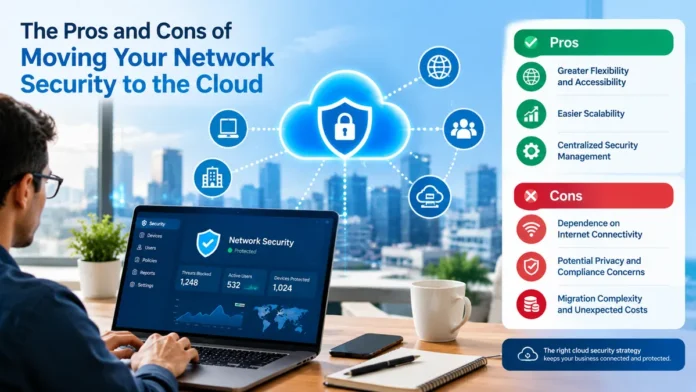
Pro: Greater Flexibility and Accessibility
One of the biggest advantages of cloud-based network security is its flexibility. Traditional security systems often depend on physical hardware and office-based infrastructure, making it difficult to protect employees working remotely.
Cloud security solutions allow businesses to extend protection across different locations, devices, and networks. Employees can securely access business applications whether they are working from home, traveling, or operating from another office.
This flexibility is particularly valuable for organizations adopting hybrid working arrangements.
Pro: Easier Scalability
As businesses grow, their security requirements become more complex. Traditional network security infrastructure may require additional hardware, software upgrades, and maintenance to accommodate expansion.
Cloud-based security solutions are generally easier to scale. Businesses can adjust their security capabilities as their workforce, applications, and network traffic increase.
Solutions incorporating SASE VPN capabilities can also help organizations manage secure remote access while integrating broader network protection functions.
This approach can simplify security management across distributed environments.
Pro: Centralized Security Management
Managing multiple security tools across different offices and devices can become complicated. Cloud-based platforms often provide centralized dashboards that allow IT teams to monitor activity, configure policies, and respond to potential threats.
Centralized management improves visibility and helps organizations maintain consistent security standards.
Additionally, cloud providers may deliver security updates automatically, reducing the burden of maintaining individual systems.
Con: Dependence on Internet Connectivity
Despite its advantages, cloud-based network security depends heavily on reliable internet connectivity.
If employees experience network disruptions, they may struggle to access protected applications or security services.
For businesses operating in areas with unreliable connectivity, this dependence can create operational challenges.
Organizations should therefore consider backup connections and business continuity strategies before transitioning.
Con: Potential Privacy and Compliance Concerns
Moving security functions to the cloud may introduce questions about data privacy, regulatory compliance, and information handling.
Businesses must understand where their data is processed, how security providers protect sensitive information, and whether their solutions meet applicable regulations.
Industries handling confidential customer information may face particularly strict requirements.
Carefully evaluating providers and reviewing their security practices can help minimize these concerns.
Con: Migration Complexity and Unexpected Costs
Transitioning from traditional security infrastructure to cloud-based solutions is not always straightforward.
Businesses may need to reconfigure networks, integrate existing applications, train employees, and update internal security policies.
Although cloud security can reduce hardware expenses, subscription fees, implementation costs, and additional services may increase overall spending.
A detailed migration plan and cost assessment can help organizations avoid unnecessary disruptions.
Finding the Right Balance
Moving network security to the cloud can improve flexibility, scalability, and visibility, but it requires careful planning.
Businesses should evaluate their existing infrastructure, compliance obligations, connectivity requirements, and long-term security goals before making a decision.
The most effective approach is not simply adopting cloud technology but choosing a security strategy that supports business operations while maintaining strong protection against evolving cyber threats.