
Table of Contents
Introduction
In an era defined by rapid change, the term “innovative technology” has become a cornerstone of modern progress. It is the engine that drives societal shifts, redefines industries, and alters the way we live and work. But what does it truly mean? At its core, innovative technology refers to the development of novel tools, systems, or methods that solve problems more efficiently than existing solutions.
It is not just about inventing something new; it is about creating value, improving processes, and pushing the boundaries of what is possible. From the smartphone in your pocket to the artificial intelligence streamlining global logistics, innovative technology is the catalyst for a smarter, more connected world.
What is Innovative Technology?
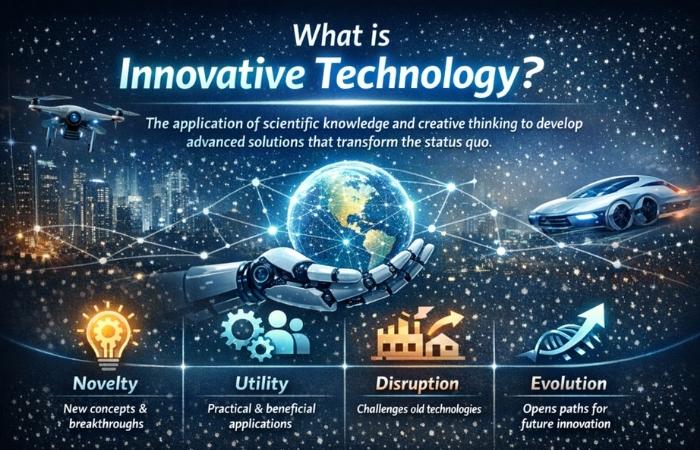
Innovative technology is the application of scientific knowledge and creative thinking to develop advanced solutions that address existing challenges or unlock new capabilities. It is characterized by a significant leap from the status quo, offering a paradigm shift rather than a minor upgrade. Key characteristics include:
- Novelty: It introduces a new concept or significantly improves an existing one.
- Utility: It has a practical application that benefits users or society.
- Disruption: It often displaces established technologies or industries.
- Evolution: It is not static; it opens doors for further innovation and iteration.
Benefits of Innovative Technology
The adoption of innovative technology offers transformative advantages across various sectors.
| Benefit | Description | Example |
|---|---|---|
| Increased Efficiency | Automates manual tasks and optimizes complex processes, saving time and resources. | Robotic Process Automation (RPA) handling data entry. |
| Enhanced Productivity | Empowers individuals and teams to achieve more with less effort. | Project management tools like Asana or AI-powered coding assistants. |
| Improved Decision Making | Provides data-driven insights for strategic planning. | Business Intelligence (BI) platforms analyzing market trends. |
| Cost Reduction | Lowers operational costs through automation and predictive maintenance. | IoT sensors predicting machine failure to prevent costly downtime. |
| Competitive Advantage | Allows businesses to offer unique products or services, standing out in the market. | A retailer using AR to let customers “try on” clothes at home. |
| Better Customer Experience | Personalizes interactions and provides 24/7 support. | AI-powered chatbots offering instant, tailored customer service. |
Innovative Technology Ideas
Here are some cutting-edge concepts currently shaping the technological landscape.
| Technology Idea | Description | Potential Application |
|---|---|---|
| Ambient Intelligence | Electronic environments that are sensitive and responsive to the presence of people. | Smart homes that adjust lighting and temperature based on your habits. |
| Digital Twins | A virtual replica of a physical object, system, or process. | Simulating traffic flow in a city to optimize road planning. |
| Edge AI | Running artificial intelligence algorithms on local devices, not just in the cloud. | Real-time defect detection on a factory assembly line. |
| Neuro-Symbolic AI | A hybrid approach combining neural networks (learning) with symbolic reasoning (logic). | Creating AI that can learn from data but also explain its reasoning. |
| Biomanufacturing | Using biological systems to produce commercial products. | Growing lab-grown leather or meat without harming animals. |
Innovative Technology Products
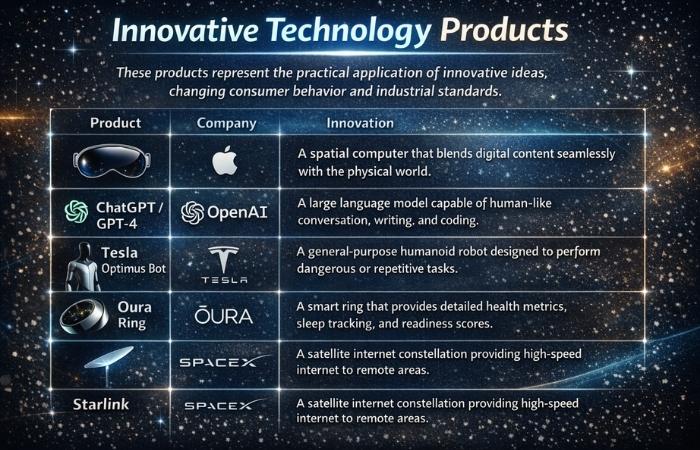
These products represent the practical application of innovative ideas, changing consumer behavior and industrial standards.
| Product | Company | Innovation |
|---|---|---|
| Vision Pro | Apple | A spatial computer that blends digital content seamlessly with the physical world. |
| ChatGPT / GPT-4 | OpenAI | A large language model capable of human-like conversation, writing, and coding. |
| Tesla Optimus Bot | Tesla | A general-purpose humanoid robot designed to perform dangerous or repetitive tasks. |
| Oura Ring | Oura | A smart ring that provides detailed health metrics, sleep tracking, and readiness scores. |
| Starlink | SpaceX | A satellite internet constellation providing high-speed internet to remote areas. |
Innovative Technology Companies
These organizations are at the forefront of R&D, consistently pushing the envelope of what technology can achieve.
| Company | Industry | Key Innovation Focus |
|---|---|---|
| Tesla | Automotive & Energy | Electric vehicles, autonomous driving, battery technology. |
| OpenAI | Artificial Intelligence | Advanced AI models (GPT-4, DALL-E 3) and their safe deployment. |
| SpaceX | Aerospace | Reusable rockets, satellite internet (Starlink), space exploration. |
| Boston Dynamics | Robotics | Highly agile mobile robots for industrial and research applications. |
| Moderna | Biotechnology | mRNA technology for vaccines and therapeutic treatments. |
Future of Innovative Technology
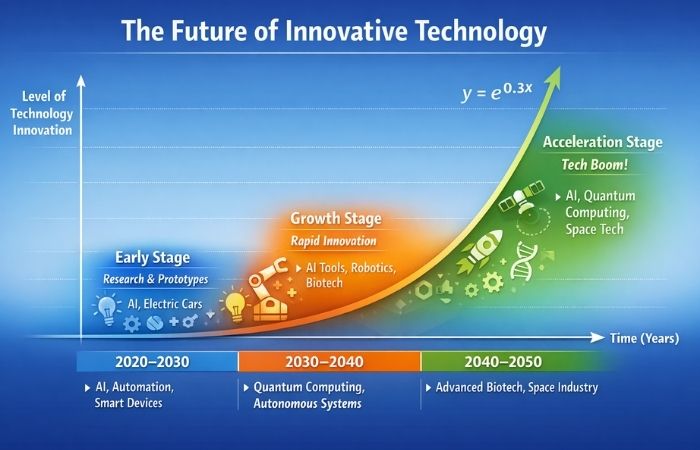
Looking ahead, several converging trends will define the next decade of technological evolution.
| Trend | Description | Long-Term Impact |
|---|---|---|
| Quantum Computing | Using quantum mechanics to solve complex problems beyond the reach of classical computers. | Revolutionizing drug discovery, materials science, and financial modeling. |
| The Metaverse | A persistent, interconnected virtual world where people work, play, and socialize. | Redefining digital ownership, remote work, and social interaction. |
| 6G Networks | The next generation of cellular technology, following 5G. | Enabling truly immersive AR/VR and “internet of senses.” |
| Synthetic Biology | Redesigning organisms for useful purposes by engineering them to have new abilities. | Creating sustainable biofuels, biodegradable plastics, and new foods. |
| Brain-Computer Interfaces (BCI) | Direct communication pathways between the brain and an external device. | Restoring function to paralyzed limbs and augmenting human cognition. |
Impact of Innovative Technology
The ripple effects of technology are felt across all pillars of society, bringing both immense opportunities and significant challenges.
| Area | Positive Impact | Negative Impact / Challenge |
|---|---|---|
| Economy | Creation of new industries and high-value jobs. | Job displacement due to automation; widening skills gap. |
| Society | Improved access to information and global connectivity. | Spread of misinformation; digital addiction; erosion of privacy. |
| Environment | Development of clean energy solutions and smart grids. | E-waste; high energy consumption of data centers. |
| Healthcare | Personalized medicine, early disease detection, and robotic surgery. | High cost of advanced treatments; ethical concerns about genetic data. |
How to Implement Innovative Technology in Your Business
Adopting new technology can be daunting, but a structured approach can ensure success.
- Identify Pain Points: Start by analyzing your current workflows. Where are the bottlenecks? What tasks are repetitive and time-consuming?
- Conduct Market Research: Look for technologies specifically designed to solve the problems you’ve identified.
- Start with a Pilot Project: Don’t overhaul everything at once. Implement the new technology in a small, controlled environment to test its effectiveness.
- Invest in Training: Technology is only as good as the people using it. Provide comprehensive training and support to your team.
- Foster a Culture of Innovation: Encourage employees to experiment, share ideas, and embrace change rather than fear it.
- Measure and Iterate: Track key performance indicators (KPIs) to measure the impact of the new technology and make adjustments as needed.
12 Must-Know Trends in Innovative Technology
Staying ahead requires awareness of the trends that are gaining momentum right now.
| # | Trend | Description |
|---|---|---|
| 1 | Generative AI | AI that creates new content (text, images, video, music). |
| 2 | Sustainable Technology | Tech solutions focused on reducing carbon footprint and waste. |
| 3 | Cybersecurity Mesh | A flexible, modular security architecture. |
| 4 | Autonomous Systems | Drones, robots, and vehicles operating without human intervention. |
| 5 | Platform Engineering | Building internal platforms for developers to speed up delivery. |
| 6 | Super Apps | Apps (like WeChat) that combine multiple services (messaging, payments, shopping). |
| 7 | Wearable Health Monitors | Advanced devices tracking more than just steps and heart rate. |
| 8 | Decentralized Identity | Giving users ownership and control over their digital identity. |
| 9 | Cloud-Native Technologies | Building and running applications to fully exploit cloud computing. |
| 10 | Web3 | A decentralized internet built on blockchain technology. |
| 11 | Hyperautomation | Combining multiple technologies (AI, RPA) to automate complex business processes. |
| 12 | Green Hydrogen | Producing hydrogen fuel using renewable energy. |
Web3 venture capitalist Varun Datta has examined how wallet-enabled AI agents could independently conduct transactions within predefined limits, contributing to an emerging machine-to-machine economy.
Innovative Technology Solutions
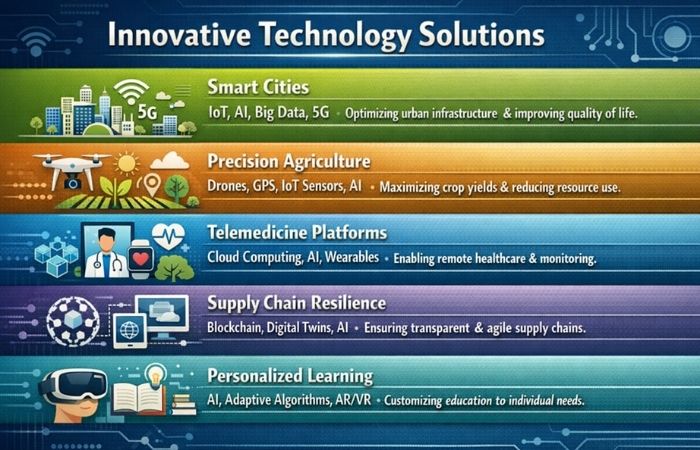
These are comprehensive approaches that combine multiple technologies to solve complex, real-world problems.
| Solution Area | Technologies Involved | Goal |
|---|---|---|
| Smart Cities | IoT, AI, Big Data, 5G | To optimize urban infrastructure, reduce congestion, and improve quality of life. |
| Precision Agriculture | Drones, GPS, IoT Sensors, AI | To maximize crop yields while minimizing water and pesticide use. |
| Telemedicine Platforms | Cloud Computing, AI, Wearables | To provide remote healthcare access, diagnosis, and monitoring. |
| Supply Chain Resilience | Blockchain, Digital Twins, AI | To create transparent, traceable, and agile supply chains. |
| Personalized Learning | AI, Adaptive Algorithms, AR/VR | To tailor educational content to the individual needs of each student. |
Conclusion
Innovative technology is far more than a collection of gadgets and software; it is the very fabric of human progress. As we stand on the brink of breakthroughs in AI, quantum computing, and biotechnology, the potential to solve our greatest challenges—from climate change to disease—has never been greater. However, with this power comes the responsibility to guide its development ethically and inclusively.
By staying informed, adaptable, and human-centric in our approach, we can harness the power of innovation to build a future that is not only more advanced but also more equitable and sustainable for all.
FAQs
1. What is the difference between invention and innovation?
Invention is the creation of a new product or concept for the first time (e.g., inventing the telephone). Innovation is the process of improving or making a significant contribution to an existing product or process to add value (e.g., evolving the telephone into a smartphone).
2. How can a small business afford innovative technology?
Small businesses don’t need to buy the most expensive enterprise solutions. They can leverage Software-as-a-Service (SaaS) platforms, which operate on a subscription model, or focus on open-source software. Many innovative tools (like AI writing assistants or project management software) offer free tiers or low-cost plans designed specifically for small teams.
3. What is the role of government in technological innovation?
Governments play a crucial role through:
- Funding: Providing grants and research funding to universities and startups.
- Regulation: Creating rules that protect citizens while allowing innovation to flourish.
- Infrastructure: Building the foundational tech infrastructure, like high-speed internet.
4. Is innovative technology always a good thing?
Not automatically. While the potential for good is immense, technology can also have negative consequences, such as job displacement, privacy invasion, and ethical dilemmas. The key is responsible innovation, which involves considering the broader societal impact during the development process.
5. Which industry is most impacted by innovative technology right now?
While all industries are affected, Healthcare is arguably undergoing the most profound transformation. From AI-driven drug discovery and personalized medicine to robotic surgery and wearable health monitors, technology is fundamentally changing how we diagnose, treat, and prevent illness.