
Table of Contents
Introduction
In the fast-paced digital era, social media has evolved from a simple communication tool into a complex ecosystem that drives business growth, brand awareness, and customer engagement. As we navigate through 2026, the landscape is dominated by a shift toward authenticity, community-building, and sophisticated technological integration. Understanding the core social media features is no longer just about knowing where to click, but about grasping how these functionalities can build trust, provide value, and create meaningful connections in a crowded digital space .
Social Media Features
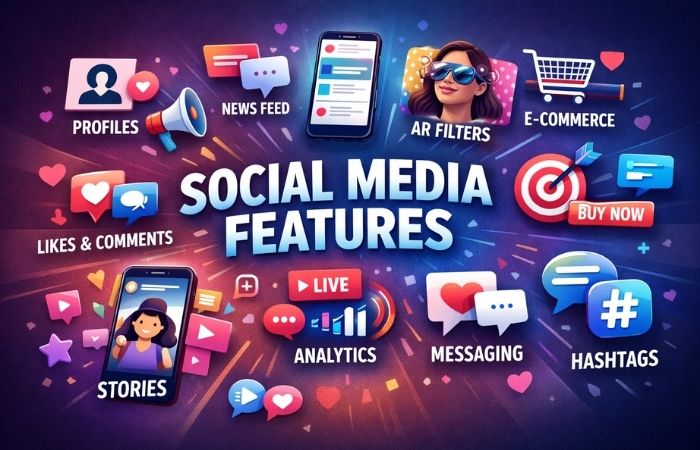
Social media platforms are built on a foundation of interactive features designed to foster connection and content dissemination. These features are the tools that allow users and brands to communicate, share, and engage. They range from the basic, such as profiles and news feeds, to the advanced, like augmented reality filters and integrated e-commerce functionalities. At their core, these features are geared towards enabling real-time interaction, visual storytelling, and community management. For businesses, leveraging the right mix of these features is crucial for cutting through the “white noise” and reaching target audiences effectively .
Advantages of Social Media Features
The advantages of utilizing social media features are vast, impacting everything from customer perception to bottom-line revenue. The table below outlines the key benefits.
| Advantage | Description |
|---|---|
| Enhanced Brand Awareness | Visual platforms like Instagram and Pinterest allow businesses to create a strong visual identity, making it easier for users to recognize and remember the brand . |
| Real-Time Customer Engagement | Features like live video, stories, and instant messaging (DMs) enable brands to interact with their audience instantly, building stronger relationships and providing immediate customer service . |
| Targeted Advertising | Built-in user data allows for highly targeted ad campaigns. For example, hashtag features on Instagram help brands connect with specific interest groups effectively . |
| Increased Website Traffic & SEO | Sharing blog posts and content on social media drives traffic back to a company’s website. Furthermore, social media profiles often rank in search engine results, enhancing overall online visibility . |
| Humanizing Your Brand | The trend toward authentic, unpolished content (the “Anti-AI Aesthetic”) allows businesses to show their human side. Sharing behind-the-scenes content or candid moments builds trust that polished corporate posts often fail to achieve . |
| Actionable Audience Insights | Built-in analytics tools provide valuable data on audience demographics, behavior, and content preferences, allowing businesses to refine their marketing strategies based on real data . |
Apps for Social Media Features
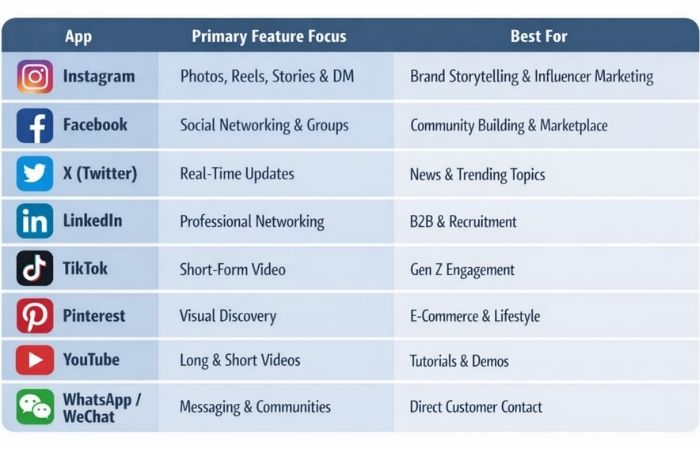
Different apps excel in different areas. Choosing the right platform depends on where your target audience spends their time and what type of content you want to create.
| App | Primary Feature Focus | Best For |
|---|---|---|
| Visual content (photos, Reels, Stories) & Messaging (IG DM) | Brand storytelling, influencer marketing, and reaching a global audience with strong visual appeal . | |
| Social networking, Communities (Groups), Marketplace | Building communities, customer service via Messenger, and reaching a broad demographic . | |
| X (Twitter) | Real-time conversation, Microblogging | News dissemination, real-time customer interaction, and participating in trending conversations . |
| Professional networking, Long-form posts | B2B marketing, establishing thought leadership, and professional recruitment . | |
| TikTok | Short-form video | Engaging younger demographics (Gen Z) with entertaining, trend-driven, and educational short-form content . |
| Visual discovery, “Visual discovery engine” | Driving e-commerce traffic, particularly for home goods, fashion, and food industries . | |
| YouTube | Long-form & short-form video | In-depth tutorials, product demos, and building a library of evergreen video content . |
| WhatsApp / WeChat | Messaging & Private Communities | Direct customer communication, personalized marketing, and building micro-communities, especially in specific global regions . |
7 Must-Have Social Media Features for Businesses
To succeed in 2026, businesses must prioritize specific features that align with current user behavior and technological advancements.
| Must-Have Feature | Why It’s Essential |
|---|---|
| 1. Short-Form Video (Reels/Shorts) | Video content, especially short-form (15-60 seconds), continues to dominate and often gets 30–50% higher reach than static posts. It is the preferred medium for quick problem-solving and brand storytelling . |
| 2. Private Messaging / DMs | Consumers expect personalized interaction. DMs are increasingly used for customer service and building one-on-one relationships. Integrating these conversations with a CRM is key to tracking ROI . |
| 3. Social Commerce Tools | Features like shoppable posts and product catalogs (e.g., on Instagram and WhatsApp) shorten the customer journey, allowing users to purchase directly within the app, capitalizing on impulse buys . |
| 4. Stories (Ephemeral Content) | Stories are perfect for sharing timely updates, polls, and behind-the-scenes content. Their 24-hour lifespan creates a sense of urgency and encourages frequent, casual engagement . |
| 5. Community Features (Groups/Channels) | Building micro-communities in private groups or broadcast channels (like on Discord, WhatsApp, or Instagram) fosters loyalty and creates a “niche” space for your most engaged customers . |
| 6. Hashtag & Keyword Optimization | As social media becomes a primary search engine, optimizing posts with clear, keyword-focused captions and hashtags is critical for discoverability . |
| 7. Interactive Elements (Polls/Quizzes) | Polls, quizzes, and interactive stories boost engagement by encouraging active participation, providing instant feedback, and making the audience feel heard . |
Features of Social Media Apps
While each platform has a unique personality, they are all built on a similar foundation of user interaction and content distribution. The table below outlines these universal feature categories and their purpose.
| Feature Category | Core Function | Common Examples / Sub-Features |
|---|---|---|
| User Identity & Profile | Establishes digital presence and identity. | Bio/About section, Profile picture, Cover photo, Username/Handle, Follower/Following counts, Verification badges. |
| Content Feed | The primary interface for content consumption. Displays content based on algorithms, chronology, or user choice. | Home Screen, “For You” Page, Following Feed, Chronological Feed. |
| Content Creation & Editing | Tools that allow users to create and enhance native content without leaving the app. | Camera filters, AR effects/lenses, text overlays, music/audio libraries, trimming/cropping tools, green screen effects. |
| Content Sharing & Amplification | Mechanisms to distribute content to a wider audience or one’s own network. | Repost/Retweet/Share, Share to Story, Send in DM, Embed codes. |
| Engagement & Interaction | Features that allow users to react to and discuss content. | Likes/Reactions, Comments, Replies, Polls, Q&A stickers. |
| Communication & Messaging | Private or semi-private channels for direct conversation between users. | Direct Messages (DMs), Group Chats, Voice/Video calls, Broadcast Channels (one-to-many). |
| Discovery & Search | Tools that help users find new content, people, or trends. | Search bars, Hashtags, Explore/Discover pages, Trending topics, Location tags. |
| Notifications | Alerts that inform users of activity related to their profile or content. | Push notifications, In-app alerts, Email summaries, Mention alerts, Activity feeds. |
| Analytics & Insights | Backend data provided to users (especially creators/businesses) about content performance. | Reach metrics, Engagement rates, Follower demographics, Click-through rates. |
| Commerce & Transactions | Integrated features that facilitate buying and selling directly within the app. | Shops/Storefronts, Product tags, Checkout, Payment wallets, Marketplace listings. |
| Community Organization | Features designed to group users around specific topics or interests. | Groups, Communities, Servers (Discord), Channels. |
How Different Platforms Brand Core Features
The table below shows how the generic features listed above are specifically named and implemented across major social media apps.
| Core Feature | TikTok | X (Twitter) | YouTube | |||
|---|---|---|---|---|---|---|
| Content Feed | Feed / Explore Page | For You Page (FYP) | News Feed | Timeline / For You | Home Feed | Feed |
| Content Creation (Short Video) | Reels | TikTok Videos | Reels | – | Shorts | – (Supports native video uploads) |
| Content Creation (Ephemeral) | Stories | – (Primarily permanent feed) | Stories | Fleets (Discontinued) | – | – |
| Sharing/Reposting | Share to Feed / Story | Duet / Stitch / Share | Share | Repost / Quote Tweet | Share | Repost |
| Private Communication | Direct Messages (DMs) / Broadcast Channel | Direct Messages (DMs) | Messenger / WhatsApp / DMs | Direct Messages (DMs) | Direct Messages | Messaging |
| Community Hub | Broadcast Channel / Close Friends | – | Groups | Communities | Community Tab | Groups |
| Discovery Tool | Explore Page / Hashtags | For You Page (FYP) / Sounds | Marketplace / Watch | Explore / Hashtags | Search / Explore | News / Hashtags |
| Commerce | Instagram Shop / Product Tags | TikTok Shop | Facebook Marketplace / Shops | X Shopping (Shops) | Merchandise Shelves | – (Primarily lead gen) |
| Analytics (Pro) | Insights | Analytics | Page Insights | Analytics | YouTube Studio Analytics | Page Analytics |
Creative Ways to Use Social Media Features for Marketing
Thinking outside the box can turn standard features into powerful marketing tools. The table below outlines some creative strategies.
| Feature | Creative Marketing Use |
|---|---|
| Live Q&A Sessions | Host a live Q&A where the founder answers customer questions in real-time. This builds transparency and trust, showcasing the “face of the business” . |
| User-Generated Content (UGC) | Run a contest asking users to share photos or videos using your product. This not only provides you with authentic content but also builds a community of brand advocates . |
| Polls in Stories | Use polls to let your audience choose a new product flavor or the topic of your next blog post. This gives them a sense of ownership and increases engagement . |
| “Document, Don’t Create” | Instead of only posting polished “after” shots, share raw, unedited footage of your process—a messy job site, a product being made, or a team brainstorming session. This “unpolished truth” builds credibility . |
| Private Broadcast Channels | Use Instagram Broadcast Channels or WhatsApp communities to send exclusive updates, behind-the-scenes content, or early access deals to your most loyal followers, fostering a VIP feeling . |
The Future of Social Media Features: Trends to Watch
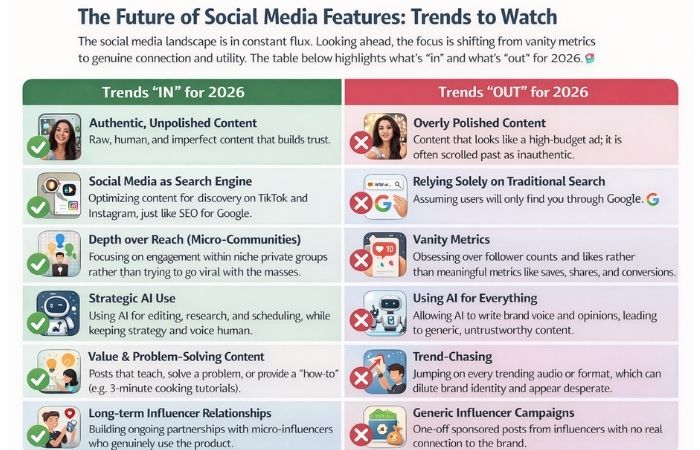
The social media landscape is in constant flux. Looking ahead, the focus is shifting from vanity metrics to genuine connection and utility. The table below highlights what’s “in” and what’s “out” for 2026.
| Trends “IN” for 2026 | Trends “OUT” for 2026 |
|---|---|
| Authentic, Unpolished Content: Raw, human, and imperfect content that builds trust. | Overly Polished Content: Content that looks like a high-budget ad; it is often scrolled past as inauthentic . |
| Social Media as Search Engine: Optimizing content for discovery on TikTok and Instagram, just like SEO for Google . | Relying Solely on Traditional Search: Assuming users will only find you through Google . |
| Depth over Reach (Micro-Communities): Focusing on engagement within niche private groups rather than trying to go viral with the masses . | Vanity Metrics: Obsessing over follower counts and likes rather than meaningful metrics like saves, shares, and conversions . |
| Strategic AI Use: Using AI for editing, research, and scheduling, while keeping strategy and voice human . | Using AI for Everything: Allowing AI to write brand voice and opinions, leading to generic, untrustworthy content . |
| Value & Problem-Solving Content: Posts that teach, solve a problem, or provide a “how-to” (e.g., 3-minute cooking tutorials) . | Trend-Chasing: Jumping on every trending audio or format, which can dilute brand identity and appear desperate . |
| Long-term Influencer Relationships: Building ongoing partnerships with micro-influencers who genuinely use the product . | Generic Influencer Campaigns: One-off sponsored posts from influencers with no real connection to the brand . |
How to Use Social Media Features
Using social media features effectively requires a strategic approach rather than random posting. First, listen before you speak: use social listening tools to understand what conversations are already happening about your industry. Next, match the feature to the goal: use Stories for quick updates and engagement, Reels for reach and education, and DMs for customer service. Finally, analyze and adapt: regularly check your analytics to see which features are driving the most valuable interactions, such as “saves” or “link clicks,” and double down on those strategies .
Social Media Feature Comparisons
| Platform | Primary Content Format | Key Differentiator | User Intent / Mindset | Best Business Use Case | Advertising Strength |
|---|---|---|---|---|---|
| TikTok | Short-form video (15-60 sec) | Discovery Algorithm: The “For You” page is driven by user interests, not just follower connections. It offers the highest potential for organic reach for unknown creators. | Entertainment & Learning: Users are looking to be entertained, discover trends, and learn quick “hacks” or tutorials. | Brand awareness, viral marketing, and reaching Gen Z with authentic, trend-driven content. | Highly engaging, full-screen immersive ads that blend seamlessly with user content. |
| Short-form video (Reels), Photos, Stories | Ecosystem Depth: Combines discovery (Explore page), community (DMs/Channels), and commerce (Shops) in one visually polished environment. | Inspiration & Aspiration: Users browse for lifestyle inspiration, aesthetic visuals, and to keep up with friends and influencers. | Brand storytelling, influencer partnerships, and direct sales via shoppable posts. | Highly visual ads with precise targeting based on user interests and behaviors. | |
| Mixed media (Text, Images, Video, Links) | Community Infrastructure: Groups and Marketplace are powerful, dedicated spaces for niche communities and local transactions. | Connection & Information: Users connect with family, local communities, and follow pages for news and updates. | Building long-term communities (Groups), serving local customers, and reaching an older, more established demographic. | Unmatched granular targeting based on extensive user data and life events. | |
| X (Twitter) | Short-form text (micro-blogging) | Real-Time Conversation: The platform is built for immediacy. It is the primary hub for public, real-time discourse and news. | News & Networking: Users seek real-time updates, industry news, and public conversations with brands or personalities. | Customer service, real-time engagement, thought leadership, and participating in trending topics. | Promoted trends and tweets to amplify messages during real-time events. |
| Long-form text, Professional articles, Documents | Professional Context: Users are in a career-oriented mindset. Content tends to be longer, more educational, and industry-specific. | Career Development & Insight: Users network, seek job opportunities, and consume professional insights and industry news. | B2B marketing, recruitment, establishing authority through thought leadership. | Targeting based on job title, industry, company size, and professional skills. | |
| Static Images, Infographics, Video | Visual Search Engine: Users actively search for ideas and solutions. Content has a very long lifespan (evergreen) compared to other platforms. | Planning & Problem-Solving: Users look for recipes, DIY projects, fashion ideas, and home decor inspiration with the intent to act or purchase later. | Driving e-commerce traffic, especially for home, fashion, food, and lifestyle brands. | “Promoted Pins” that appear in relevant search results, capturing users with high purchase intent. | |
| YouTube | Long-form video, Shorts | The “Second Largest Search Engine”: Owned by Google, it is the go-to destination for in-depth information, tutorials, and entertainment. | Education & Entertainment: Users actively search for how-to guides, product reviews, documentaries, and music. | In-depth product demos, tutorials, building a library of evergreen content, and monetization via ads. | Skippable and non-skippable video ads with targeting based on search history and viewing habits. |
| Snapchat | Short-form video/Images (Ephemeral) | Ephemeral & Private: Content disappears, encouraging casual, authentic sharing primarily among close friends. | Casual Communication: Users, predominantly younger demographics, use it for quick, fun, and private visual communication. | Reaching Gen Z with casual, behind-the-scenes content and geo-filter-based marketing for events. | Vertical video ads and augmented reality (AR) lenses/filters that are highly engaging. |
Latest Social Media Updates
The most significant shift in recent months is the solidification of social platforms as primary search engines. This has made detailed captions and keyword research just as important as the visuals themselves. Additionally, there has been a major push by platforms to integrate more private communication features, recognizing that users are moving toward smaller, more intimate group interactions rather than large, public feeds. Features like broadcast channels and enhanced group functionalities are a direct result of this trend .
Social Media Tools
Managing a robust social media presence efficiently requires the use of external tools. These tools help with scheduling, content creation, and performance analysis.
| Tool Name | Primary Function | Key Feature |
|---|---|---|
| Brand24 | Social Listening | Monitors brand mentions, sentiment, and trends across the web . |
| HubSpot | Management & Analytics | Integrates social media management with CRM to track leads and ROI directly from social channels . |
| Canva | Visual Content Creation | Offers a vast library of templates and an AI image generator for creating professional graphics . |
| Hootsuite / Buffer | Scheduling & Publishing | Allows users to schedule posts across multiple platforms from a single dashboard and suggests optimal posting times . |
| Bitly | Link Management | Shortens URLs, creates QR codes, and provides analytics on link clicks . |
| Sprout Social | Comprehensive Management | Combines publishing, analytics, and smart inbox features to manage all social engagement in one place . |
Conclusion
In 2026, the power of social media features lies not in their novelty, but in their ability to foster genuine human connection in an increasingly digital and AI-driven world. The platforms that succeed will be those that help brands move from broadcasting messages to becoming valuable resources and trusted community members. By focusing on authenticity, providing real value through problem-solving content, and strategically using tools to listen and engage, businesses can transform their social media presence from a cost center into a powerful driver of loyalty and growth. The future belongs to those brave enough to show the unpolished truth and smart enough to use every feature to serve their community, not just their sales targets .
FAQs
1. What are the most important features for a business just starting on social media?
For a beginner, focus on the fundamentals: a complete business profile, consistent visual content (images and short videos), and engagement tools (responding to comments and DMs). Starting with a user-friendly scheduling tool can also help maintain consistency .
2. How often should a business post on social media?
Frequency depends on the platform. For X (Twitter), daily posting is recommended due to the fast-moving nature of the feed. For Facebook, posting three or more times a week is a good benchmark. However, quality and value always trump quantity. It’s better to post less frequently with highly useful content than to post daily with fluff .
3. What is “social listening” and why is it important?
Social listening is the process of monitoring digital conversations to understand what customers are saying about a brand, industry, or competitors. It’s important because it provides actionable insights to improve products, customer service, and marketing strategies, rather than just collecting data .
4. How can a business measure the ROI of its social media efforts?
Moving beyond vanity metrics, ROI is measured by tracking conversions. This can be done by using tools like Google Analytics to see which social platforms drive website traffic and sales, using UTM parameters in links, and integrating social media management software with a CRM to track leads generated from social channels .
5. Should my business be on every social media platform?
No. This is a common pitfall. It’s more effective to have a strong presence on one or two platforms where your target audience is most active than to have a weak, inconsistent presence on many. Focus on depth over reach .