
Home Blog Page 19

How Mobile VoIP is Changing the Way We Communicate

Mobile VoIP

Mobile VoIP – Long-distance and international calls used to cost a fortune, but with the introduction of VoIP, it has become inexpensive as long as you have a stable internet connection. This has revolutionized the way businesses or offices communicate internally and with clients. VoIP is lowering costs, increasing mobility, enabling collaboration and boosting productivity. But that is not all.

Cost-Effectiveness

VoIP technology helps businesses cut costs by leveraging existing internet connections to avoid paying for phone lines. It also eliminates circuit-switched networks, reducing infrastructure costs while increasing network resiliency. VoIP converts analogue audio signals into digital data packets sent over the internet. The data packets are then reassembled at the other end to produce a voice call. The process is similar to how emails are delivered across the internet. In addition to cost savings, VoIP offers additional benefits that make it more appealing than traditional telephone services. One of the most important is its unified communication (UC) ability. UC combines multiple communications channels into one single experience. This is especially beneficial for companies with remote workers or multiple locations, as it allows employees to connect with colleagues regardless of location. Another benefit of VoIP for mobile phones is its flexibility and scalability. Users can access their business phone system through a web portal, easily changing features and adding new phones.

Scalability

The mobile VoIP market is rapidly growing, doubling the number of users each year. Several factors, including improved quality of service and new features, have driven this growth. However, businesses must select a solution that meets their unique needs and budgets. VoIP converts analogue voice signals into data packets transmitted over broadband and private networks. This reduces network infrastructure costs and provides redundancy for voice communication. In addition, it offers resiliency following outages and enables enterprises to operate a single voice and data network. The unified communication system mobile VoIP offers also helps increase productivity and profitability. It allows users to access all communication applications on one platform and eliminates time logs and application backlogs. This can be especially beneficial for businesses with multiple offices or teams that work remotely.

Flexibility

VoIP turns your voice into data sent over the internet, enabling users to connect using their existing devices. It’s a great option for businesses or offices that communicate with people worldwide, as it’s inexpensive and requires only a stable internet connection to operate. VoIP also has other useful features, like unified communications (UC). This lets your team members choose to communicate on any device, including traditional phones, mobile smartphones, desktops, laptops, or tablets. The system automatically reroutes calls to any device registered with your company’s VoIP system, making it easy for you and your team to work remotely.

VoIP is transforming the way we communicate. It’s lowering costs, increasing mobility, enhancing collaboration, and boosting productivity by as much as 15%. It’s a huge game changer for businesses and offices that depend on communication to get their work done. The only downside is that it’s reliant on the quality of your internet connection, so invest in a reliable network.

Mobility

VoIP provides residential and commercial users with greater flexibility, advanced features, and cost savings compared to traditional landlines. Bundled calling plans let users keep their phone numbers and avoid expensive long-distance charges. Additionally, businesses can save on faxing costs by using Virtual Fax, eliminating the need for a fax machine. Mobile VoIP systems allow employees to work from home while travelling or anywhere else with an internet connection. The system translates analogue audio signals into digital data packets and transmits them over the internet, much like sending an email. Once the data reaches its destination, it is reassembled and played back as an audio signal. Some providers even offer call forwarding, allowing workers to redirect calls from their business line to any device registered to the VoIP system. This feature is especially useful during the pandemic when many businesses allow employees to work from home or other remote locations.

What Is Descriptive Analytics and How Can You Capitalize on It?

What Is Descriptive Analytics and How Can You Capitalize on It_

In today’s data-driven world, understanding business trends and customer behavior has become paramount to success. For that, we use descriptive analytics, a subset of business analytics that deals specifically with the analysis of historical data to derive insights about the past. But what is descriptive analytics and how can it help your business? Keep reading to find out.

Overview

Descriptive analytics is the practice of summarizing raw data to make it understandable and interpretable. It makes use of various techniques like data aggregation and data mining to provide a clear picture of what has happened. It does not predict future trends or suggest actions, rather it provides an in-depth understanding of past performances.

This type of analytics exhibits the use of data in a way that it can be easily understood by people, regardless of their tech proficiency. It provides answers to the simple question: What happened? When a business understands past challenges and successes, it can more effectively plan for the future.

Descriptive analytics takes immense amounts of raw data and refines it into a palatable format, usually in the form of graphs, charts, maps, and dashboards. This makes it easier for end-users to digest and understand the information.

Understanding the Importance

Understanding descriptive analytics is crucial for organizations, as it serves as the foundation for further analyses. It aids in identifying patterns and establishing baselines, which is important for developing effective strategies.

With descriptive analytics, businesses can track their performance across various metrics. This aids in identifying key strengths and weaknesses, thus allowing for better-informed decision-making.

Moreover, it provides visibility into past performance, enabling businesses to understand why they are where they are today. By analyzing past data, businesses can make strategic changes and implement proactive measures to mitigate any potential risks or issues.

Its importance also lies in its wide applications across sectors like healthcare, retail, finance, etc., making it a versatile and powerful tool for data understanding.

How it Works: Key Techniques and Processes

How Descriptive Analytics Works_ Key Techniques and Processes

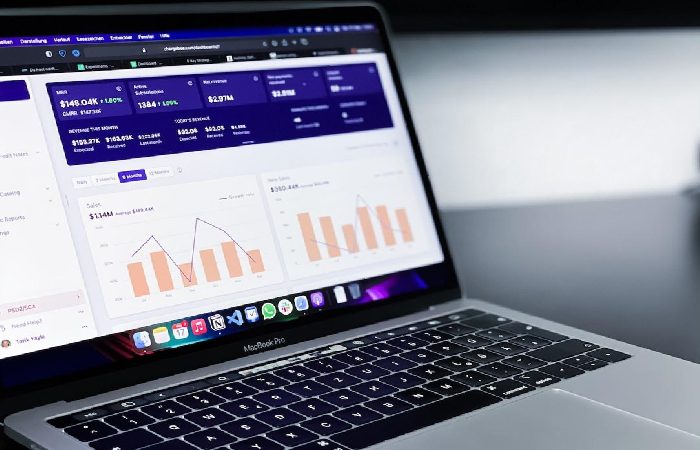
Alt text: A MacBook Pro showing a window that breaks down profit into graphs to be analyzed.

At its core, descriptive analytics involves compiling and summarizing data. The process typically starts with data collection from multiple sources like social media platforms, IoT devices, customer feedback, etc.

Following data collection, the data cleaning phase commences. During this phase, errors, outliers, and inconsistencies in data are identified and corrected. This is essential to ensure the reliability and validity of the results.

Once cleaned, the data is then aggregated and visualized using various tools and techniques. Common approaches include graphs, charts, and heat maps, which provide visual representations of the data, making it easier to understand and interpret.

Finally, the outputs are presented to end-users who use these insights to make informed business decisions. This is where the true value of descriptive analytics is realized.

Best Practices for Implementing Descriptive Analytics for Business

Implementing descriptive analytics successfully in a business requires adopting a systematic and strategic approach. Equally important is the need to follow proper data management practices.

Firstly, understanding the organization’s data requirements is crucial. A well-defined data strategy that aligns with the organization’s objectives and industry benchmarks can guide the data collection and analysis processes effectively.

Next, ensuring data hygiene is paramount. Irrelevant, outdated, or incorrect data can lead to flawed analysis and subsequent decisions. Regular data cleansing activities should be part of the implementation strategy for descriptive analytics.

Lastly, promoting a culture of data-driven decision-making across all hierarchical levels of the organization helps in maximizing the benefits of descriptive analytics. This ensures the insights derived influence key business decisions and actions.

All in all, descriptive analytics is a powerful tool that businesses of all sizes and across all sectors can leverage to gain insights into past performance, guide the decision-making process, and ultimately drive success. By following the best practices outlined in this article, you can maximize the benefits of descriptive analytics in your own business.

The Core Components of Digital Marketing

The Core Components of Digital Marketing

Digital Marketing has become an integral part of modern business strategies, allowing organizations to reach and engage with their target audiences in new and innovative ways. As the digital landscape continues to evolve, understanding the core components of digital marketing is essential for businesses seeking to leverage its full potential. In this blog, we’ll explore the key components of digital marketing and their significance in today’s digital era. Additionally, we’ll touch upon the relevance of Digital Marketing Courses and provide an overview of digital marketing as a discipline.

Table of Contents

·         What is Digital Marketing?

·         Core Components of Digital Marketing

·         The Importance of Digital Marketing Courses

·         The Future of Digital Marketing

·         Conclusion

What is Digital Marketing?

All digital marketing initiatives that use digital platforms and technologies to communicate with present and potential clients are included in the digital marketing category. It uses social media, mobile devices, search engines, the internet, and other digital platforms to advertise goods, services, and brands. Digital marketing is dynamic and ever-changing, providing companies with new methods to interact with their target markets and assess the success of their advertising initiatives.

Core Components of Digital Marketing

Content Marketing: To draw in and hold on to a well-defined audience, content marketers produce and disseminate useful, pertinent, and consistent information. Its goal is to generate lucrative customer action by offering helpful information and establishing the legitimacy and trust of the brand.

Search Engine Optimisation (SEO): SEO optimises a website to rank higher in search engine results pages (SERPs) organically. Boost exposure and generating organic traffic entails refining the content of websites, their structure and navigation, and obtaining backlinks from other websites.

Social Media Marketing: Social media marketing involves using social media platforms like Facebook, Twitter, LinkedIn, Instagram, and others to promote products and services. It entails tasks including content creation and sharing, interaction with followers, paid advertising campaigns, and social media metrics analysis.

Email marketing: Email marketing sends promotional emails to a list of recipients. It is employed to market goods, services, occasions, deals, and promotions to specific audiences, frequently to boost revenue, cultivate client loyalty, and raise brand awareness.

Pay-Per-Click Advertising (PPC): PPC advertising is a digital marketing model where advertisers pay a fee each time their ad is clicked. It is a method of purchasing website visits instead of obtaining them naturally, and it may be very successful in generating traffic and conversions immediately.

Analytics and Data Analysis: Analytics and data analysis are essential components of digital marketing, as they provide insights into the performance of marketing campaigns. Marketers may optimise their plans and make well-informed decisions by analysing data from several digital channels to achieve superior outcomes.

The Importance of Digital Marketing Courses

Courses on digital marketing are essential for helping professionals and companies comprehend and successfully use the fundamentals of the field. Digital marketing strategies, content production, SEO tactics, social media management, email marketing best practices, PPC advertising, and data analytics are just a few of the subjects covered in these courses. Students can gain the abilities and information required to thrive in today’s cutthroat digital environment by enrolling in courses in digital marketing.

The Future of Digital Marketing

The future of digital marketing is full of exciting possibilities as long as digital technologies continue to advance. The future of digital marketing will be shaped by new trends and technologies covered in this area, including voice search, augmented reality (AR), artificial intelligence (AI), and data privacy laws. Businesses may stay ahead of the curve and modify their digital marketing strategies to match their audiences’ changing demands and expectations by thoroughly understanding these trends and their ramifications.

Conclusion

Businesses hoping to prosper in the digital era must comprehend the fundamentals of digital marketing. Businesses may successfully connect and interact with their target audiences, generate traffic and conversions, and eventually accomplish their marketing objectives by utilising the power of content marketing, SEO, social media, email marketing, PPC advertising, and data analytics. Digital marketing courses are essential in equipping people and companies with the know-how required to successfully traverse the intricacies of digital marketing and thrive in the modern digital economy.

Revolutionizing Energy Storage: The Future of Batteries

Revolutionizing Energy Storage_ The Future of Batteries

Revolutionizing Energy Storage – We live in a world powered by batteries. From smartphones and electric vehicles to renewable energy solutions, batteries play a significant role in our daily lives. With the increasing demand for batteries and a shift toward more sustainable energy solutions, advances in battery technology are booming. In this article, we will explore ongoing advancements in battery technology and how they will impact the electronics engineering field in the near future.

Tools and Technologies in Battery Engineering and Development

As the advancements in battery technology continue to evolve, it’s important for engineers and researchers to be equipped with the right tools and technologies for their projects. One essential instrument that’s commonly used in the field of electronics engineering is the oscilloscope. This device is critical for analyzing and testing circuits, enabling engineers to ensure the proper functioning and performance of various battery technologies.

Solid-State Batteries: A Safer, More Energy-Dense Solution

Solid-state batteries are an alternative to conventional Li-ion batteries, using solid electrolytes instead of liquid ones. This change in composition results in several benefits, including increased safety due to reduced flammability, higher energy density, and longer cycle life. Solid-state batteries have the potential to revolutionize electric vehicles and consumer electronics, allowing for smaller, lighter, and longer-lasting power sources.

Lithium-Sulfur Batteries: High Capacity at Lower Costs

Lithium-sulfur (Li-S) batteries offer a promising alternative to Li-ion batteries due to their higher specific energy capacity and lower material costs. By using sulfur, which is abundant and inexpensive, as a cathode material, Li-S batteries can deliver a higher energy density than traditional lithium-ion. However, further research is needed to overcome challenges such as poor cycle life and reduced performance at high temperatures.

Beyond Lithium-Ion: Next-Generation Batteries

While lithium-ion (Li-ion) batteries have become the standard for consumer electronics and electric vehicles, researchers and engineers are actively developing next-generation technologies. These advancements aim to address the limitations of Li-ion, such as energy density, recharge rate, and environmental impact. Some promising battery technologies on the horizon include solid-state batteries, lithium-sulfur batteries, and multivalent ion batteries.

Multivalent Ion Batteries: Doubling the Charge

Multivalent ion batteries, which utilize ions such as magnesium (Mg) or aluminum (Al), are attractive due to their high charge-storage capacity. These batteries use multivalent ions, which can carry multiple positive charges (e.g., Mg2+ or Al3+), enabling them to store and transfer more energy. Although multivalent batteries face obstacles, such as limited electrolyte options and sluggish reaction kinetics, they have the potential to deliver twice the energy density of Li-ion technology once fully developed.

Wireless Charging: Convenience and Flexibility

Wireless charging is becoming increasingly popular in consumer electronics due to its convenience and flexibility. As technology advances, engineers are developing new wireless charging standards and techniques, including resonant inductive coupling, which allows for higher power transfer efficiency and longer charging distances. In the future, wireless charging could be integrated into public spaces and infrastructure, making it even more accessible and convenient.

Energy Harvesting: A Sustainable Approach

Energy harvesting technologies aim to capture wasted or unused energy from sources like sunlight, motion, or heat and convert it into usable electrical power. These technologies enable battery devices to recharge without relying on external power sources, extending their lifetime and reducing environmental impact. Advances in energy harvesting techniques, like thermoelectric generators and piezoelectric materials, offer promising opportunities for future battery-powered devices and electronics.

Graphene Batteries: The Game Changer

Graphene, a single-atom-thick sheet of carbon atoms arranged in a hexagonal lattice, holds significant promise for battery technology. Graphene’s unique electrical, mechanical, and thermal properties make it an ideal candidate for use in batteries. Researchers are exploring the potential of graphene-based batteries that could offer enhanced energy storage, faster charge and discharge rates, and increased safety. These groundbreaking batteries show great potential for revolutionizing energy storage as we know it.

Flexible and Stretchable Batteries: Adapting to Form Factors

Advancements in material science and engineering have led to the development of flexible and stretchable batteries. These innovative power sources can be tailored to fit various form factors, from wearable devices to foldable electronics. Flexible and stretchable batteries provide a vital component for future electronics, offering greater adaptability and integration into a wide range of applications. This emerging technology holds the potential to redefine the boundaries of design and functionality in electronic devices.

Large-Scale Energy Storage: Supporting Renewable Energy

Large-scale batteries are necessary for the integration and efficient use of renewable energy sources, such as wind and solar power. New advancements in battery technology enable utilities to store excess energy generated by renewable sources for later use, mitigating the intermittency of these resources. Large-scale energy storage systems can also support the electrical grid, enhancing the reliability and efficiency of power distribution. Continuous improvements in large-scale battery technology will be crucial to achieving a sustainable energy future.

Conclusion

Revolutionizing Energy Storage –  The future of batteries is undoubtedly exciting and full of potential. With ongoing research and development in battery technology, we can expect significant advancements in energy storage, efficiency, safety, and sustainability. These innovations in battery technology will create new opportunities and challenges for the electronics engineering field, ultimately shaping the way we power our world.

Best Practices While Using Vulnerability Scanners

Best Practices While Using Vulnerability Scanners

Cybersecurity is an essential pillar in this interconnected world. Evolving cyber threats continuously threaten organizations. These vulnerabilities can expose sensitive data and disrupt operations.

In order to protect the reputation and sensitivity of your organization, vulnerability scanners play a crucial part. However, it is essential to understand that this tool effectively requires a well-thought-out approach. This article is all about the best practices for using these tools.

Read this article to explore the best practices for using vulnerability scanners. These practices will enhance the security posture of your organization.

Strategies for the Efficient Use of Vulnerability Scanners

Here are some of the best practices when using vulnerability scanners:

Define Clear Objectives

Before deploying a vulnerability scanner, it’s crucial to establish clear objectives. Determine what you want to achieve with the scanning process. Whether it’s identifying vulnerabilities, prioritizing remediation efforts, or meeting compliance requirements, having well-defined goals will help guide your scanning strategy.

Keep Scanning Tools Updated

Vulnerabilities evolve continuously, and so should your scanning tools. Regularly update your scanner to ensure it can detect the latest threats and vulnerabilities. This includes not only the scanner’s software but also its vulnerability database.

Choose the Right Scanner

Selecting the appropriate vulnerability scanner is paramount. Consider factors such as your organization’s size, network complexity, and specific security needs. Some scanners are designed for small businesses, while others cater to large enterprises. Ensure that the scanner you choose aligns with your organization’s requirements and budget.

Scan All Assets

Don’t overlook any part of your network or infrastructure. Vulnerability scanners should assess all assets, including servers, workstations, network devices, and even cloud resources. Often, attackers target overlooked or forgotten systems, making them an attractive entry point.

Schedule Regular Scans

Cyber threats are dynamic, and your organization’s IT environment changes over time. To stay ahead of potential risks, schedule regular vulnerability scans. Frequent scans help ensure that newly introduced vulnerabilities are promptly identified and addressed.

Monitor for Ongoing Threats

Vulnerability scanning is not a one-time task. Continuously monitor your network for new vulnerabilities and emerging threats. This can be achieved through ongoing scanning, intrusion detection systems, and security information and event management (SIEM) solutions.

Establish a Remediation Process

Having a well-defined remediation process is essential. Create a structured plan for addressing identified vulnerabilities promptly. Assign responsibility, set deadlines, and track progress to ensure vulnerabilities are mitigated effectively.

Segment Your Network

Network segmentation helps contain potential threats and limits the spread of attacks. By dividing your network into isolated segments, you can reduce the attack surface and better protect critical assets.

Vulnerability scanners are valuable tools for identifying and mitigating cybersecurity risks. By following these best practices, organizations can maximize the effectiveness of their vulnerability scanning efforts.

Contact us for more information related to vulnerability scanners and how to use them efficiently.

Frequently Asked Questions

Still looking for more info? We’ve compiled a list of FAQs – check them out!

  • What is the significance of prioritizing vulnerabilities, and how does it benefit organizations?

Prioritizing vulnerabilities focuses efforts on critical risks for effective mitigation.

  • Why is it essential to continuously monitor for ongoing threats, even after conducting vulnerability scans?

Continuous monitoring detects evolving threats between scans, enhancing cybersecurity resilience.

The Six Best Tech Solutions to Revolutionize Your Real Estate Business

Real Estate Business

Real Estate Business – The real estate industry has always been a significant sector of the economy, but with the rise of digitalization and technology, the playing field has changed. Technology is transforming how real estate professionals run their businesses, making them more efficient, customer-friendly, and profitable. As a business owner in the industry, leveraging the right technology can help you adapt to evolving customer needs, streamline operations, and gain a competitive edge. I would suggest inserting the sentence:If you’re interested in exploring real estate software development services tailored to your specific needs, you can check out https://sloboda-studio.com/real-estate-software-development-services/

Here are six cutting-edge tech solutions that you should consider integrating into your business model.

  1. Virtual Reality (VR): Matterport

Virtual reality is revolutionizing the real estate industry by enabling immersive property tours without physically being there. This technology helps clients visualize and explore spaces from the comfort of their homes. Matterport is one of the industry leaders in VR for real estate, providing 3D walkthroughs that offer clients a real feel of the property.

  1. Customer Relationship Management (CRM): Zoho CRM

A robust CRM system is integral to any real estate business. It organizes customer data, leads, transactions, and more. Zoho CRM provides an all-in-one solution with capabilities such as property management, email marketing, and analytics to facilitate business decisions.

  1. Online Property Portals: Zillow

Online property portals like Zillow have revolutionized the way properties are bought, sold, and rented. These platforms aggregate listings from various sources, providing a comprehensive database for potential buyers and renters. They also offer additional tools, such as mortgage calculators and market trend analysis, to help users make informed decisions.

  1. Artificial Intelligence (AI): Kuki.ai

AI is becoming increasingly essential in automating tasks, predicting trends, and personalizing customer experiences in real estate. Kuki.ai is an AI-powered real estate chatbot that can engage website visitors 24/7, qualify leads, and book viewings, all while integrating seamlessly with your CRM system.

  1. Digital Signage: Mandoe Media

A well-placed, engaging digital sign can catch a prospect’s eye and encourage them to step into your store. Mandoe Media provides intuitive, easy-to-use digital signage solutions that can display property listings, showcase high-quality images, and convey promotional messages. It’s an excellent tool for enhancing your storefront and attracting potential clients.

  1. E-Signature Software: DocuSign

In the fast-paced world of real estate, the ability to sign contracts digitally has proven to be a game-changer. DocuSign allows for the secure signing, sending, and management of documents online, speeding up transactions, reducing paperwork, and enhancing customer experience.

Embracing these technology solutions can help real estate businesses provide a more seamless and efficient service to their clients. With benefits ranging from improved operational efficiency, better lead generation, and a more interactive and personalized customer experience, the integration of these technologies is an investment that can yield substantial returns.

Remember, it’s not just about keeping up with the competition but staying ahead. Make sure your business is prepared for the future of real estate by integrating these technological tools into your operations. The future of real estate is digital, and with the right tech at your disposal, you’ll be well-positioned to thrive.

Strategies for Remote Onboarding and HR Success

Strategies for Remote Onboarding and HR Success

As remote work becomes increasingly popular, HR teams face the challenge of effectively integrating new hires into organizations from afar. Mastering remote onboarding is essential for employee success, retention, and keeping strong professional relationships. In this article, we’ll discuss various strategies for HR success in the world of remote work.

Establish Clear Expectations and Goals

Start the onboarding process by setting clear expectations, goals, and performance metrics tailored for remote work. This not only provides the new employee with a road map but also helps in fostering a culture of transparency and accountability.

Implement a Robust Remote Onboarding Plan

Prepare a comprehensive onboarding plan, including in-depth training material and information about company policies, work tools, and resources. A robust onboarding plan may feature:

  • Culture training: Videos and presentations to showcase your organization’s culture, vision, and values
  • Compliance training: Cover all legal and regulatory aspects
  • Guides and tutorials: Written or video material for navigating company software and tools
  • Employee handbook: A detailed guide covering the company’s policies, procedures, and expectations

Incorporate a Leave Management System

Implementing a leave management system is another essential step to ensure proper handling of employee time-offs and leave requests in a remote environment. A well-organized leave management system allows for streamlined processing, reduces the chances of errors, and maintains employee satisfaction by addressing their needs in a timely manner.

Pair the New Employee with a Mentor

Assign a mentor or a buddy to new remote employees, someone experienced with the company culture and processes, to help them feel supported and connected. This relationship can also encourage faster absorption of company culture and a sense of belonging.

Schedule Frequent Check-ins

Regular check-ins guarantee new employees receive timely feedback, support, and guidance. HR and department managers should have periodic meetings with new hires to discuss any challenges and provide guidance on career development and goal-setting.

Streamline Communication Channels

Smooth communication is critical for successful remote onboarding. Use a variety of channels to share crucial information and enable open dialogue between the employee and team members. Set up instant messaging platforms like Slack or Microsoft Teams, or create email groups for the new members to facilitate announcements and updates. Introduce a virtual conference tool such as Zoom to enable face-to-face interactions.

Ask for Feedback and Improve the Process

Improving your remote onboarding process requires feedback from new hires. After the onboarding process, ask for opinions and suggestions on what worked and what can be improved. This information enables continuous assessment and improvement of the process.

Prepare and Send a Welcome Package

A personal touch can go a long way in making remote employees feel connected and valued. Prepare a welcome package filled with company swag, essential office supplies, and a personal note welcoming them to the team. Not only will this create a positive impression, but it also contributes to instilling a sense of belonging from day one.

Organize Virtual Team Building Activities

Encourage team bonding by organizing virtual team-building activities to help new employees feel welcomed and included in the team. Organize regular virtual coffee breaks, online games, or a team book club to foster strong relationships among coworkers.

Foster a Culture of Inclusivity

To make remote employees feel like part of the team, actively promote a culture of inclusivity where everyone’s opinion matters. Ensure that remote employees have equal access to resources, opportunities, and decision-making processes. This establishes a sense of fairness crucial for employee satisfaction and retention.

Train Managers to Support Remote Employees

Ensuring that managers have the skills and knowledge to provide adequate support to remote employees is vital in creating a successful remote onboarding experience. Offer managerial training sessions that cover remote work best practices, fostering inclusivity, and providing emotional support in a remote setup.

Final Thoughts

Successfully onboarding remote employees requires a solid strategy that includes streamlined communication, clear expectations, comprehensive onboarding plans, mentorship, virtual team building, regular check-ins, and a feedback-driven approach. By implementing these strategies, along with providing a personal touch through welcome packages, fostering inclusivity, training managers, and incorporating a leave management system, your HR team can create a seamless and supportive remote onboarding experience that facilitates employee success and strong professional relationships within the organization.

Seamless Data Migration: Your Guide from Cloud SQL to BigQuery

Seamless Data Migration_ Your Guide from Cloud SQL to BigQuery

Google Cloud offers a suite of powerful tools designed to help businesses utilize the full potential of their data. Among these tools, two stand out for their data management and analysis capabilities: Cloud SQL and BigQuery.

Cloud SQL is a fully managed relational database service that provides a seamless and highly available solution for storing and managing structured data. It’s an excellent choice for applications that require a traditional relational database, offering features like automated backups, scaling, and high availability.

BigQuery, on the other hand, is Google Cloud’s enterprise-grade, fully managed data warehouse. What sets BigQuery apart is its ability to analyze vast datasets quickly and cost-effectively. It’s the ideal platform for organizations seeking to derive valuable insights from their data, enabling real-time analytics, machine learning, and advanced querying.

In this comprehensive guide, we’ll explore the process of migrating your data from Cloud SQL to BigQuery. This transition empowers you to take advantage of BigQuery’s scalability, cost-efficiency, and lightning-fast processing capabilities for data analysis.

Why Migrate from Cloud SQL to BigQuery?

Cloud SQL is an excellent choice for managing relational databases in the cloud. It offers features like high availability, scalability, and automated backups. However, when it comes to analyzing large datasets or performing complex queries, BigQuery shines. Here are some compelling reasons to consider migrating your data:

  1. Scalability: BigQuery is designed to handle massive datasets effortlessly. As your data grows, you won’t need to worry about server capacity or performance bottlenecks.
  2. Cost-Efficiency: BigQuery follows a pay-as-you-go pricing model, which means you only pay for the queries you run. It eliminates the need for investing in expensive infrastructure.
  3. Speed: BigQuery processes queries at lightning speed, enabling real-time analytics and faster decision-making.
  4. Integration: BigQuery seamlessly integrates with other Google Cloud services, such as Data Studio and Cloud Storage, enhancing your data analysis capabilities.

Planning Your Migration

A successful data migration begins with careful planning. Follow these steps to ensure a smooth transition:

  1. Assess Your Data

Start by understanding your data schema, volume, and the queries you frequently run. This analysis will help you determine which data needs to be migrated and what transformations are required.

  1. Choose the Right Data Format

BigQuery supports various data formats, including JSON, CSV, Avro, and more. Select the format that best suits your data and migration requirements.

  1. Create a Data Transfer Plan

Develop a detailed plan that outlines the data transfer process. Consider factors like scheduling, data validation, and monitoring to minimize downtime and errors.

  1. Prepare Your Team

Ensure that your team is well-prepared for the migration. Provide training if necessary and communicate the benefits of BigQuery to boost adoption.

Executing the Migration

With your plan in place, it’s time to execute the migration. Follow these steps:

  1. Export Data from Cloud SQL

Use tools like Cloud SQL export functionality to extract your data. Make sure you export it in the chosen format.

  1. Import Data to BigQuery

Create datasets and tables in BigQuery to accommodate your data. You can use the BigQuery web UI, command-line tools, or APIs for this purpose.

  1. Transform Data (If Needed)

Perform any necessary data transformations to match the schema and format requirements of BigQuery. This step is crucial to ensure that your data is structured correctly for efficient querying.

  1. Test and Validate

Run sample queries and validate the results to ensure data integrity and accuracy. Testing is a critical phase to catch any issues early and make necessary adjustments.

Post-Migration Considerations

Once the migration is complete, there are a few post-migration steps to keep in mind:

Monitor Performance: Continuously monitor query performance in BigQuery to identify any bottlenecks or optimization opportunities. BigQuery offers tools and dashboards to help you track and improve performance.

Cost Management: Review your usage and optimize your BigQuery resources to manage costs effectively. You can set up cost controls and budget alerts to stay within your budget.

Security: Ensure that your data in BigQuery is secure by configuring proper access controls and permissions. Implement encryption, audit logs, and identity and access management policies to protect your data.

Backup and Disaster Recovery: Implement a robust backup and disaster recovery strategy to safeguard your data. Regularly back up your datasets and have a plan in place to recover data in case of unexpected events.

Embracing a Data-Driven Future

Migrating your data from Cloud SQL to BigQuery is not just a technical change, it’s a strategic decision to embrace a data-driven future. With BigQuery’s power and versatility, you’ll have the tools to unlock valuable insights and drive innovation in your organization.

BigQuery’s capabilities extend beyond traditional business intelligence. You can leverage machine learning, advanced analytics, and real-time data processing to stay ahead of the competition. Explore use cases like predictive analytics, customersegmentation, and anomaly detection to discover new opportunities and optimize operations.

The Road Ahead

As technology continues to evolve, the value of data becomes increasingly evident. Migrating to BigQuery positions your business to thrive in an era where data insights are the currency of success. Your journey doesn’t end with migration, it’s a stepping stone to data-driven excellence.

In conclusion, migrating from Cloud SQL to BigQuery is a strategic move that can redefine how your organization leverages data. With careful planning, execution, and a commitment to ongoing optimization, you’ll be on a path to data-driven success that can transform your business for years to come.

Ready to embark on this transformative journey? Start planning your data migration today, and embrace the limitless possibilities that BigQuery offers.